
Mango cheesecake is that sweet spot where tropical brightness meets creamy indulgence. Imagine a velvety cheesecake bursting with mango flavor whether it’s baked to rich perfection or set to silky no-bake bliss. This is the definitive guide for mango cheesecake lovers, packed with tips, two perfected methods, and answers to the questions most people struggle with. Whether you’re baking for a special gathering or craving a cool treat on a warm day, you’re covered.

Table of Contents
The Ultimate Mango Cheesecake Recipe
Velvety, tropical mango cheesecake with a creamy texture and two preparation options: baked or no-bake. A refreshing twist on the classic.
- Prep Time: 20 minutes
- Cook Time: 50 minutes
- Total Time: 4 hours including chill
- Yield: 1 cheesecake (8 servings) 1x
- Category: Dessert
- Method: Baking
- Cuisine: American
- Diet: Vegetarian
Ingredients
14–16 Graham crackers or any plain cookies of your choice
50 grams unsalted butter, melted
400 grams cream cheese at room temperature
2 tablespoons corn starch
½ cup sugar
pinch sea salt or kosher salt
2 mangoes (peeled and chopped) or 1 cup mango pulp
2 eggs at room temperature
pinch cardamom powder (optional)
Instructions
1. Preheat oven to 350°F (180°C). Crush cookies into fine crumbs.
2. Mix crumbs with melted butter until sandy. Press into a springform pan base.
3. Bake crust for 10 minutes or freeze for 20 minutes. Let cool.
4. Blend mangoes into a smooth puree.
5. Mix corn starch, sugar, salt, and cardamom in a bowl.
6. Beat cream cheese until smooth. Add mango mix and blend on low.
7. Add eggs one at a time, mixing gently after each.
8. Pour filling into crust and tap to release air bubbles.
9. Wrap pan in foil and place in water bath.
10. Bake for 45–55 minutes. Let cool in oven for 1 hour.
11. Refrigerate for 3+ hours before serving. Garnish with mango slices.
Notes
Use fresh Ataulfo or Kent mangoes for best flavor.
Do not overmix once eggs are added.
Always bring cream cheese to room temperature before using.
Nutrition
- Serving Size: 1 slice
- Calories: 320
- Sugar: 22g
- Sodium: 180mg
- Fat: 22g
- Saturated Fat: 12g
- Unsaturated Fat: 8g
- Trans Fat: 0g
- Carbohydrates: 26g
- Fiber: 1g
- Protein: 5g
- Cholesterol: 90mg
A Guide to the Star Ingredient: The Mango
Choosing the Best Mango Variety
Not all mangoes are created equal, especially when used in cheesecake. The key is choosing varieties with less fiber, natural sweetness, and bold flavor. Ataulfo (also called Honey or Champagne mangoes) are top-tier for desserts they’re creamy, less stringy, and beautifully sweet. Kent mangoes are another excellent choice, particularly when you want a bright orange hue and minimal fibrous texture. Tommy Atkins, the most common in US supermarkets, are fine in a pinch but slightly fibrous and less flavorful.
If you want your cheesecake to sing with authentic tropical essence, go with Ataulfo or Kent when they’re in season. The difference in taste is surprising.
For a fun twist, pair your mango cheesecake with a cinnamon-rich crust like the one used in this churro cheesecake recipe, which adds an unexpected crunch and warmth.
Fresh, Canned, or Frozen Mango?
Here’s a quick breakdown of your mango options:
| Type | Pros | Cons |
|---|---|---|
| Fresh Mango | Bright flavor, natural sweetness, best texture | Seasonal, needs peeling and puréeing |
| Canned Mango Pulp | Convenient, consistent taste year-round | May contain added sugar or preservatives |
| Frozen Mango | Available year-round, good for puréeing | Must be thawed properly to avoid excess water |
For the richest flavor and color in your cheesecake, fresh ripe mango is best, especially when you’re recreating that bold look you see in showstopper recipes like this loaded brownie cheesecake cup.
How to Make Baked Mango Cheesecake
Ingredients for the Perfect Baked Cheesecake
To create that rich, creamy mango cheesecake with the perfect crust, start with these carefully chosen ingredients. You can customize the crust using graham crackers or opt for a shortbread cookie base for a more buttery finish.
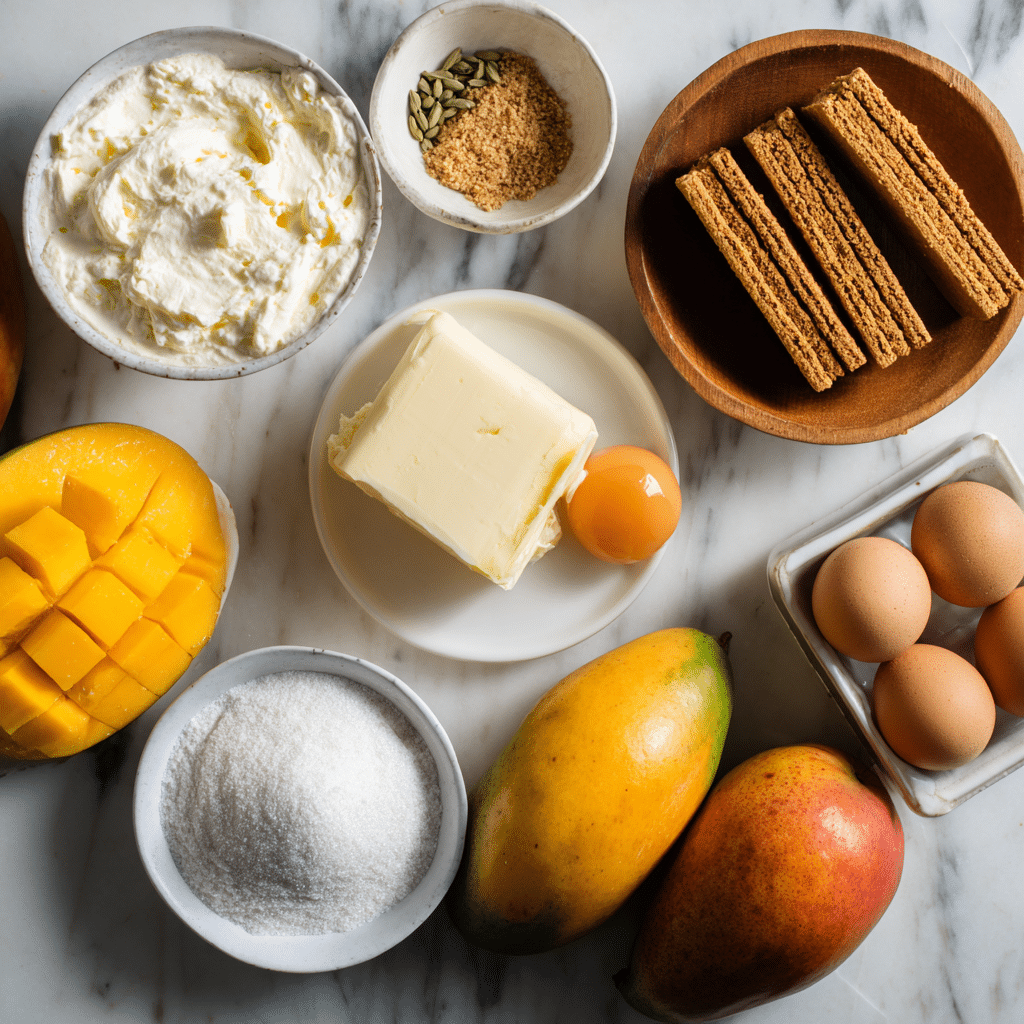
For the crust
- 14–16 graham crackers (or any plain cookies of your choice)
- 50 grams unsalted butter, melted
For the cheesecake filling
- 400 grams cream cheese, room temperature
- 2 tablespoons corn starch
- ½ cup granulated sugar
- Pinch of sea salt or kosher salt
- 2 ripe mangoes, peeled and chopped (or 1 cup store-bought mango pulp)
- 2 large eggs, room temperature
- Pinch of cardamom powder (optional but recommended)
You can explore alternate flavor layers, such as the mocha swirl in this mocha cake recipe if you’re feeling bold with your flavor profiles.
Step-by-Step Instructions
1. Preheat and Prepare
Preheat your oven to 350°F (180°C). Begin by making the crust. In a food processor, pulse the crackers or cookies into a fine crumb. Transfer the crumbs to a mixing bowl, add the melted butter, and stir until the mixture resembles damp sand.
2. Form the Crust
Press the mixture firmly into the bottom of a 7-inch springform pan. Use a flat-bottomed cup to ensure it’s evenly packed. For a crisp finish, bake the crust for 10 minutes. Alternatively, freeze it for 15–20 minutes if you want a no-bake base.
3. Cool the Crust
Let the crust cool at room temperature while you prepare the filling. This step helps prevent the crust from becoming soggy a mistake seen in many rushed cheesecakes.
4. Make Mango Puree
Blend the peeled mango into a smooth puree. If using canned or frozen mango, ensure it’s drained or thawed and patted dry to prevent extra moisture.
5. Mix Dry Ingredients
In a small bowl, combine corn starch, sugar, salt, and cardamom powder. This ensures even distribution and smooth incorporation into the batter.
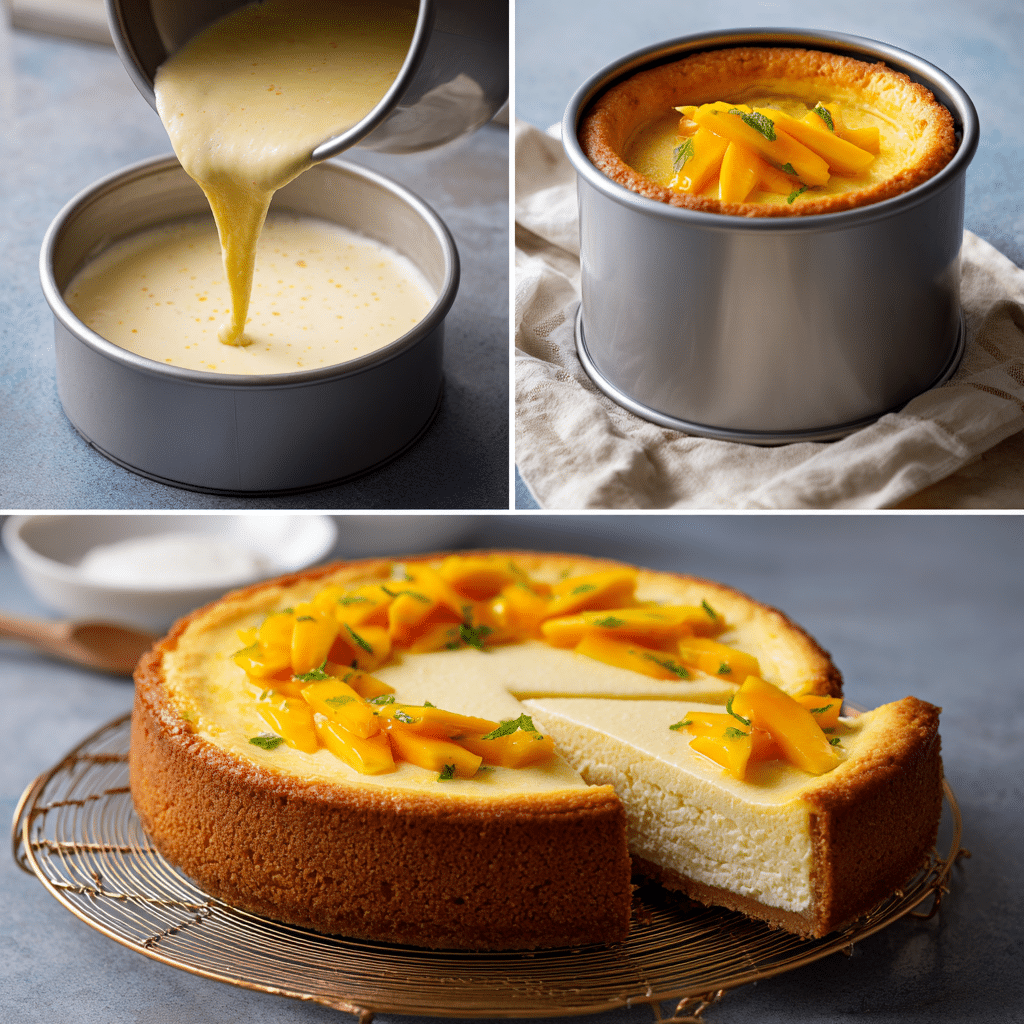
6. Beat the Cream Cheese
Using a hand mixer or stand mixer, beat the cream cheese until it’s completely smooth and fluffy. This step is crucial for that signature silky texture.
7. Add Mango Mixture
Add the mango puree and the dry ingredient mix to the cream cheese. Beat on low speed only this is critical to avoid over-whipping air into the batter, which can lead to cracking.
8. Add the Eggs
Add the eggs one at a time, mixing gently after each addition until just incorporated. Overmixing here can ruin the structure of your cheesecake.
9. Pour and Prep for Baking
Line your springform pan with parchment paper if desired. Pour the filling onto the cooled crust. Tap the pan gently on the counter to release air bubbles.
10. Use a Water Bath
Wrap the bottom of your springform pan in 2–3 layers of heavy-duty foil. Place it in a larger pan and add hot water halfway up the sides. This protects the cheesecake from oven heat and ensures an even, crack-free bake.
11. Bake
Bake for 45–55 minutes or until the edges are set but the center jiggles slightly. Turn off the oven, crack the door, and let it cool slowly for 1 hour. Rapid cooling leads to cracks a common problem you can solve with the tips in our troubleshooting guide.
12. Chill and Serve
Refrigerate the cheesecake for at least 3 hours, preferably overnight. Top with thin slices of fresh mango before serving. If you’re craving more fruity combinations, take inspiration from this strawberry cheesecake sandwich recipe for layering techniques.
Expert Tips for Flawless Cheesecake
Room Temperature Is Non-Negotiable
One of the most overlooked steps in cheesecake baking is letting your ingredients reach room temperature. Cold cream cheese won’t mix smoothly, which leads to a lumpy batter and a grainy texture. Take out your cream cheese, eggs, and sour cream (if using) at least two hours before starting.
Room temperature ingredients also blend more easily, reducing the need for excess mixing a small detail that makes a big difference. For another tip on handling dairy-rich desserts, you’ll love the method used in this protein brownie recipe, which also relies on temperature balance for a smooth finish.
Don’t Overmix the Batter
Overmixing is the number-one culprit behind cracked cheesecakes. Once you’ve added the eggs, mix only until combined. Over-aerating your batter introduces air pockets that expand during baking and collapse as the cheesecake cools causing dramatic surface cracks.
A good rule of thumb? Mix on the lowest speed and stop once your ingredients are blended. If you’re unsure, gently fold the last bit by hand.
How to Cool It the Right Way
Never remove a cheesecake from the oven and place it directly into the refrigerator. That shock in temperature will almost guarantee cracking. Instead:
- After baking, turn off the oven.
- Leave the oven door slightly ajar and let the cheesecake sit for 1 hour.
- Remove it, let it reach room temperature.
- Then cover and refrigerate for at least 3 hours, ideally overnight.
This slow, gradual cooling process is key to the smooth surface you want for decorating with those perfect mango slices, or even a drizzle like the one seen in this Dubai chocolate strawberries dessert.
Preventing a Soggy Crust
Water bath leaks are the bane of a cheesecake’s base. Here’s how to beat it:
- Use heavy-duty foil two or three layers around your pan.
- Pre-bake the crust before adding filling to give it structure.
- Avoid pressing the crust up the sides where water can seep through.
You can also place your cheesecake pan inside a larger cake pan before setting that inside the water bath. This creates a double barrier against water, a trick commonly used in professional kitchens.
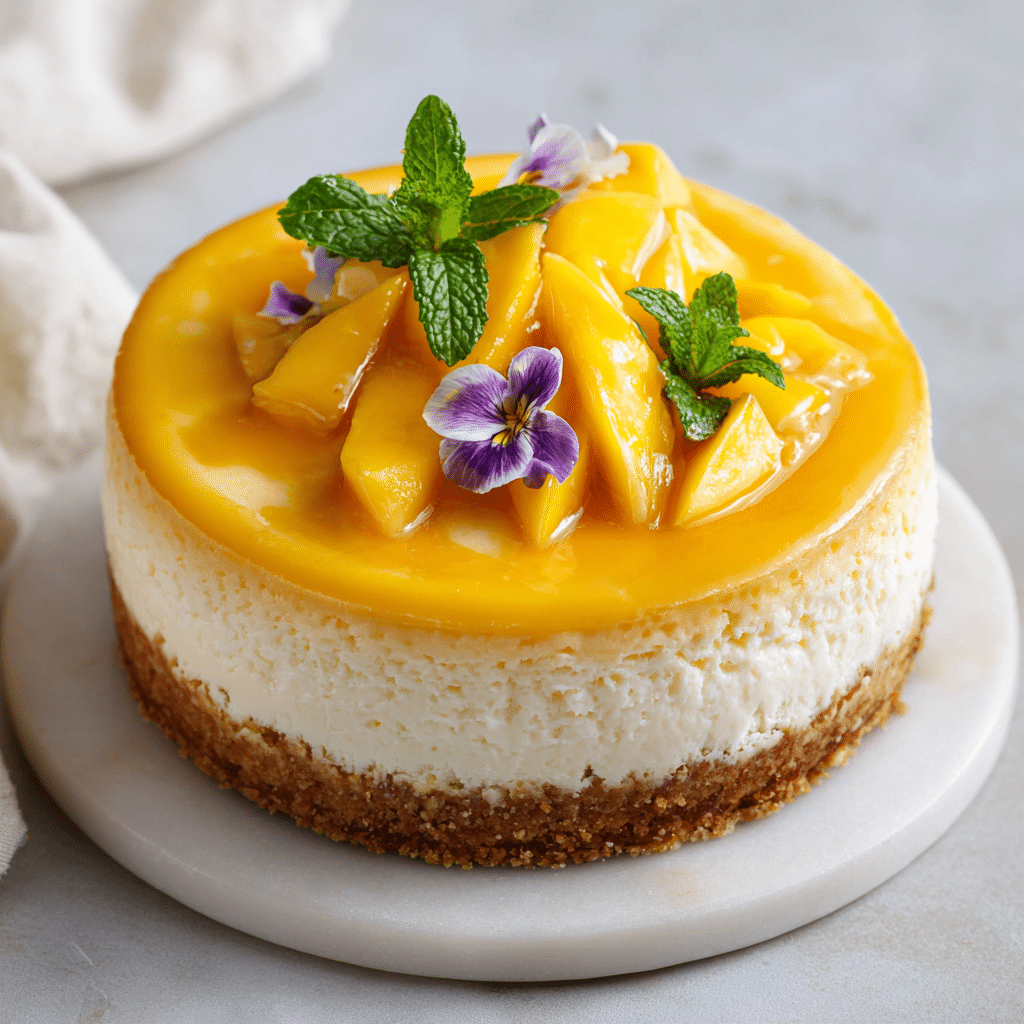
The Ultimate Cheesecake Troubleshooting Guide
Here’s your go-to table for fixing common mango cheesecake problems.
| Problem | Why It Happened | How to Fix It Next Time |
|---|---|---|
| My cheesecake has a huge crack. | Overmixed, overbaked, or cooled too quickly. | Use a water bath; stop mixing when ingredients are just combined; cool gradually. |
| The crust is wet and soggy. | Condensation from the water bath; wasn’t pre-baked. | Wrap the pan tightly in multiple foil layers; always pre-bake crust. |
| The texture is grainy or lumpy. | Cream cheese was too cold when mixed. | Let cream cheese, sour cream, and eggs sit out for at least 2 hours. |
Even advanced bakers run into these snags. Bookmark this guide or refer back whenever you need it. And if you’re experimenting with fusion desserts like this easy strawberry tres leches cake, these lessons still apply.
Fun Flavor Twists and Variations
Once you’ve mastered the base mango cheesecake, it’s time to have fun. Here are simple ways to turn your standard recipe into a tropical showstopper or spice-infused masterpiece.
Tropical Fusion
For a bold, sunshine-filled flavor, add lime zest to your mango puree before mixing it into the batter. The citrus brightens the overall profile and enhances the mango’s natural sweetness. Another great addition is passionfruit puree just a tablespoon stirred into the filling or drizzled on top after baking takes the dessert to another level.
This kind of tropical punch pairs beautifully with the soft textures found in recipes like this cottage cheese mousse, which also leans on fruit-forward richness.
Spiced Mango
For a warm, aromatic edge, stir in ground cardamom or ginger to the crust or filling. Cardamom works especially well with mango, adding subtle floral notes. Just a pinch of either will transform the flavor into something that feels special, festive, and unique.
If you’ve ever enjoyed the warm spices in recipes like the best chocolate chip cookie recipe, you already know how effective spice layering can be.
Coconut Dream
For a tropical vibe that leans creamy and nutty, swap the graham crackers for crushed coconut biscuits or macaroons in your crust. Top the baked cheesecake with a sprinkle of toasted shredded coconut for a golden, crunchy finish.
You can also fold a couple of tablespoons of coconut cream into the mango puree before mixing it into the batter. This gives a subtle richness without overpowering the mango flavor.
Craving contrast? Try a crispy coconut topping similar to the ones in churro cheesecake for an irresistible texture twist.
Conclusion: Your Turn to Create the Perfect Cheesecake!
Whether you’re baking a classic or chilling a no-bake version, this mango cheesecake recipe gives you two perfected approaches and tons of pro tips to guarantee success. Choose your mangoes wisely, avoid overmixing, and don’t skip the water bath for the baked version.
Now it’s your turn make it your own! Add lime, swirl in passionfruit, or top it with toasted coconut. However you twist it, mango cheesecake is always a hit.
Watch this quick video tutorial on YouTube for a visual guide to making mango cheesecake step by step.
Frequently Asked Questions (FAQs)
Can I make this cheesecake vegan?
Yes, absolutely. Use vegan cream cheese, a flax egg substitute (1 tbsp ground flax + 3 tbsp water per egg), and plant-based butter for the crust. Swap regular sugar for a vegan-friendly version. If you’re doing no-bake, use coconut cream for richness.
How to make no-bake mango cheesecake?
Make the same crust but set it in the fridge. For the filling, blend cream cheese, mango puree, sugar, and whipped cream. Stir in melted gelatin (or agar agar for vegan). Pour into the crust and refrigerate for 6–8 hours.
How to make vegan mango cheesecake?
Use vegan cream cheese, coconut cream, maple syrup, and mango puree. For thickening, use agar agar or cornstarch. The base can be made from dates and almonds or crushed vegan cookies.
How do I store mango cheesecake and for how long?
Wrap your cheesecake tightly in plastic wrap or an airtight container. Store in the fridge for up to 5 days or freeze slices for up to 2 months. Thaw overnight in the refrigerator before serving.
Can I make this without a springform pan?
Yes, but it will be trickier to remove cleanly. Use a deep cake pan lined with parchment paper for easier lifting. Just be careful when unmolding to avoid breaking the crust.
My no-bake cheesecake didn’t set. What went wrong?
Most likely issues: not enough chilling time, not using a stabilizer like gelatin or agar agar, or too much liquid from mango puree. Always chill for at least 6–8 hours, and follow ratios carefully.
For a firm yet creamy texture, take a cue from this loaded brownie cheesecake cup recipe it balances filling structure with richness beautifully.

Hi, I’m Lina! I’m a 43-year-old home cook and mom of two, serving up easy, soul-hugging recipes for real-life families. Join me for delicious and reliable baking recipes. Everything from cakes, brownies, cheese cake and cookies to bars, quick breads, and more. Every recipe is tested, perfected, and made to inspire confidence in your kitchen. Happy baking!